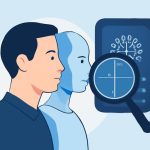
What Is an AI Image Detector and Why It Matters Today
Every day, billions of images are uploaded, shared, and remixed across the internet. Among them, a growing portion are generated or heavily altered by artificial intelligence. An AI image detector is a specialized system designed to analyze a picture and estimate whether it was created by a human using a camera or by an AI model such as Stable Diffusion, Midjourney, or DALL·E. This technology has quickly become critical as synthetic images spread across news feeds, ad campaigns, and social media.
Unlike traditional image analysis tools that might focus on simple metadata or obvious signs of editing, an AI image detector looks much deeper. It evaluates pixel-level patterns, subtle textures, noise distributions, and structural irregularities that rarely appear in natural photography. AI-generated images, even when visually stunning, often carry statistical fingerprints from the generative models that produced them. These patterns can include unnaturally smooth gradients, repetitive artifacts in backgrounds, or inconsistencies in tiny details like eyelashes, reflections, or text in the image.
The need for reliable detection has become urgent for several reasons. First, misinformation and disinformation campaigns increasingly rely on synthetic visuals. A convincing fake image can spread faster than a text-based rumor because humans process visuals quickly and with emotional intensity. Second, brands and creators face reputational and legal risks when AI-generated visuals are used without disclosure or to impersonate individuals. Third, educational institutions and creative communities want clear distinctions between authentic photography and computer-generated artwork to ensure transparency and fair evaluation of work.
AI image detectors typically use one or more machine-learning classifiers trained on massive datasets of both real photographs and generated images from multiple models. By learning the statistical differences between these two categories, the detector can output a probability score—how likely it is that the image is AI-generated. Some systems go even further, attempting to identify the specific family of models (for example, diffusion-based vs. GAN-based) or even flag areas of an image that look particularly synthetic.
As synthetic media continues to evolve, the role of AI image detection is not just about catching fakes; it is about establishing trust in digital visual content. Whether for journalists verifying sources, platforms enforcing content policies, or everyday users double-checking what they see, the ability to quickly and accurately assess images is becoming a foundational layer of digital literacy.
How AI Detectors Work: Inside the Technology That Spots Synthetic Images
Modern AI detector systems are much more advanced than simple “fake vs. real” filters. They combine multiple techniques from computer vision, pattern recognition, and deep learning to form a robust judgment about an image’s origin. At the core of most solutions is a convolutional neural network (CNN) or a transformer-based architecture trained to recognize the distinct characteristics of AI-generated imagery.
The training process begins with large, curated datasets. One set consists of photographs captured with a wide range of cameras under varied lighting, scenes, and conditions. The other set contains images produced by several generations of AI models: early GANs (Generative Adversarial Networks), diffusion models, and cutting-edge text-to-image systems. During training, the network learns to map image features to labels such as “real” or “AI-generated.” Over time, it becomes sensitive to nuanced cues that humans rarely notice consciously, such as anomalous noise patterns or unnatural correlations between neighboring pixels.
Many AI image detectors also use frequency-domain analysis. While humans see color and shapes, algorithms can transform an image into its frequency components to study repetitive patterns, compression artifacts, and the kind of smoothness that often appears in synthetic renders. AI-generated content tends to have distinctive spectral signatures because generative models optimize toward visually pleasing results rather than naturally occurring sensor noise.
Another layer involves checking for inconsistencies within the image itself. For example, if a portrait has earrings that differ subtly between ears, reflections that do not match the environment, or impossible lighting directions, the detector can treat these as strong hints of generation. Advanced models may integrate facial landmark detection, body pose estimation, or object consistency checks to enrich their decision-making. These signals are aggregated into a final confidence score, giving users a clear indication of how likely an image is to be synthetic.
To remain effective, detectors must constantly adapt. As generative models improve, many of the easily detectable artifacts disappear. This creates a technological “arms race” where creators of generative models aim to produce images that look ever more realistic, while detection systems evolve to spot increasingly subtle traces. Some detectors incorporate continual learning, regularly updating their parameters as new types of AI images emerge. Others use ensemble methods, combining outputs from multiple specialized models—one tuned for faces, another for text-heavy images, another for landscapes—to create a more reliable overall verdict.
Performance metrics also matter. Precision, recall, false-positive rates, and robustness across different domains determine whether an AI detector can be trusted in high-stakes scenarios like news verification or fraud prevention. Developers conduct extensive benchmarking using images from unseen models and real-world environments to ensure that the detector does not overfit to a narrow set of patterns. In practice, transparent reporting of confidence scores and limitations helps end users interpret results correctly rather than taking them as infallible judgments.
Real-World Uses, Risks, and Evolving Strategies to Detect AI Images
The phrase detect ai image has quickly moved from technical circles into everyday conversations because the stakes are increasingly visible in public life. Newsrooms now regularly confront questionable images tied to breaking events. A single fabricated photo can influence stock prices, international relations, or public opinion before fact-checkers can respond. AI image detectors give journalists and investigators an essential early-warning tool to flag visuals that require extra scrutiny before publication.
Social media platforms and online marketplaces face similar challenges. Users may upload AI-generated profile pictures, deepfaked celebrity endorsements, or manipulated product photos that misrepresent reality. Automated detection systems can pre-screen content at scale, routing suspicious images to human moderators or applying contextual labels such as “synthetic media.” This layered approach helps platforms balance free expression with safety and authenticity. Transparency tags, combined with robust detection, allow viewers to understand what they are seeing without banning all AI creativity outright.
In the corporate world, brand protection is a growing use case. Companies worry about fake promotional images that misuse logos, create counterfeit products, or portray executives in fabricated settings. An AI image detector integrated into threat-intelligence workflows can identify these visuals across the web, triggering takedown requests or legal actions. Similarly, financial institutions use image detection in know-your-customer (KYC) processes to reduce identity fraud, flagging suspicious ID photos or altered documents that might bypass manual review.
Education and research also benefit. In digital art and photography competitions, organizers may require contestants to disclose when entries are AI-assisted. Detectors can support fairness by verifying that rules are followed. Academic researchers studying misinformation campaigns or societal impacts of generative AI rely on detection tools to compile accurate datasets of synthetic media. These studies, in turn, feed back into better policies and more refined detection techniques.
However, this technology is not without risks and complexities. Over-reliance on automated detection can lead to false accusations when real photos are misclassified as AI-generated, particularly at lower resolution or after heavy compression. Marginalized communities, activists, or journalists operating in hostile environments could be harmed if authentic evidence is dismissed as “fake” based solely on algorithmic output. Ethical deployment requires clear guidelines: detectors should assist human judgment, not replace it, and results should be communicated with appropriate uncertainty.
Meanwhile, creators of generative models explore countermeasures such as watermarking and provenance tracking. Some propose embedding invisible digital signatures into AI-generated images so that compliant tools can easily identify them. Others work on cryptographic content credentials—metadata chains that record an image’s origin, editing history, and authorship. When combined with detection algorithms, these techniques offer a more holistic solution: not only can systems infer whether an image is synthetic, they can also verify where it came from and how it has been modified.
Looking ahead, detection will likely expand beyond individual images. Video, 3D assets, and interactive experiences generated by AI will demand new forms of analysis. Multi-modal detectors that consider text, audio, and visual context together may be better at spotting coordinated disinformation campaigns. As generative AI becomes embedded into everyday tools, the ability to transparently label, verify, and critically assess visual content will be a fundamental component of digital trust, shaping how societies navigate creativity, truth, and manipulation in the age of machine-generated imagery.