
Every second counts on a busy dock. When yard congestion builds and trailers queue, the difference between a fast, ergonomic unload and a manual, stop‑start slog shows up in overtime, damage rates, and downstream bottlenecks. Purpose-built rollers for unloading trucks transform that first touchpoint—from the trailer floor to the receiving line—into a controlled, predictable flow. Whether handling parcels, cartons, totes, or mixed SKUs, well-specified roller solutions shorten dwell time, reduce strain on teams, and improve the consistency of your dock-to-stock process. This guide breaks down how these systems work, what to look for, and how to implement them for gains in throughput, safety, and ROI.
What Truck-Unloading Rollers Are and How They Work
Rollers for unloading trucks are modular conveyor elements that let packages glide from trailer to staging or sortation zones with far less manual lifting. At their core are cylindrical rollers—typically steel, zinc-plated, or polymer—spaced to support the smallest package in your flow. As cartons make contact, either gravity or powered movement advances the load. In high-velocity docks, this simple mechanical interface becomes a high-leverage tool: it standardizes handoff, minimizes awkward reaches, and creates a consistent pace for receiving teams.
There are several primary categories. A gravity roller conveyor depends on a slight decline to keep loads moving. It’s cost-effective, rugged, and ideal for consistent package sizes or when power is limited. Flexible or accordion gravity sections add casters and hinged frames so teams can snake a path directly into the trailer, then collapse the conveyor when finished. Skate-wheel variants—multiple small wheels on axles—offer similar benefits for lighter cartons with smooth bottoms.
Powered solutions use motorized rollers or belts to move loads on the level. MDR (motor-driven roller) conveyors place compact motors inside select rollers, creating controllable zones that can start, stop, and accumulate cartons without contact. This is especially useful when synchronizing the dock with scanners, dimensioners, or divert points. Telescopic conveyors extend deep into a trailer, bringing the receiving line to the freight rather than sending operators inside. Telescopic units can be roller- or belt-based; rollers excel for rigid-bottom parcels, while belts handle polybags or irregular items that might snag.
Key specifications shape performance and longevity. Roller diameter (e.g., 38–76 mm) determines load capacity and the smoothness of travel. Bearing design influences noise, heat, and lifespan in stop‑start duty cycles. Surface finishes—from galvanized to rubberized sleeves—adjust friction and protect delicate packaging. Frame materials range from painted steel to stainless for washdown or coastal environments. Small details matter: end-stop design, sideguards, and transition plates prevent edge catches as loads move between sections, while zero-pressure accumulation logic in MDR prevents bumping and damage.
Modern systems are increasingly smart. Integrated sensors cue rollers only when needed, cutting energy use and noise. Data taps monitor zone occupancy and cycle counts, paving the way for predictive maintenance. Combined with ergonomic design—proper working heights, handrails, and lighting—these elements turn the back of the trailer into a safer, lighter, and faster workspace.
How to Select the Right System: Throughput, Space, and Safety
Begin with throughput. Map current and peak unload rates (cartons per hour), then account for trailer mix—53-footers, sea containers, box trucks, and vans have very different geometries. A gravity line with a 2–5% slope may hit targets in a small-parcel operation; a high‑mix, high‑volume dock often benefits from MDR zones or telescopic conveyors to maintain pace without pushing or stacking. Uniformity of package bottoms matters: rigid cartons roll effortlessly on metal rollers; polybags and jiffy mailers may require belts or sleeve-coated rollers to avoid stalling and snags.
Space dictates form. If docks are tight, flexible gravity or powered units that collapse and park between doors can save critical aisle space. For deep trailers, telescopic booms eliminate unsafe walks and reduce the distance an operator needs to carry a carton. Think in systems: inbound lanes, a transition bridge across the dock threshold, the primary conveyor (roller or belt), and a handoff to sortation or pallet build areas. Each junction needs smooth transitions and side protection to keep freight aligned and protect edges.
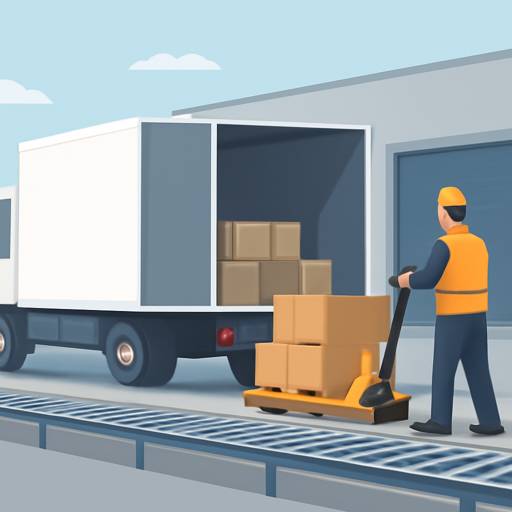
Environment shapes durability. In humid or coastal regions, galvanized or stainless rollers resist corrosion. Cold-chain docks call for lubricants and bearings rated for low temperatures; dust-prone facilities benefit from sealed bearings and covers that keep contamination out. Duty cycle also matters: continuous peak-hour operation justifies heavier frames, larger roller diameters, and quick-release components that speed up maintenance.
Safety and ergonomics are non-negotiable. Set roller heights within ergonomic reach—typically waist height—to minimize bending. Add emergency stops at intervals and clearly visible pull-cords for powered lines. For gravity systems, install chocks and dock locks to prevent trailer movement; for powered systems, include soft-start controls to avoid sudden jolts. Guard pinch points at transitions, and use anti-runback devices on slopes where appropriate. Good lighting at the trailer mouth and inside the trailer reduces trip hazards and missteps.
Integration unlocks bigger gains. Barcode readers, in-motion weighing, and dimensioning systems placed downstream of the dock can capture data without slowing flow. With zero-pressure logic, MDR zones sequence cartons into these devices automatically. Pairing conveyors with WMS tasks—like dynamic put-to-cart or lane assignment—ensures every carton is already “known” when it touches the floor. Finally, plan serviceability: standardized roller sizes, toolless side covers, and modular drive cards keep downtime short and predictable.
Implementation Playbook and Real-World Scenarios
Start with a time-and-motion study. Measure average unload time per trailer, peak dwell, touches per carton, and ergonomic risk factors (reach distance, carry distance, twist frequency). From there, create a future-state map: where the conveyor enters the trailer, how cartons advance, where they accumulate, and how they hand off to scanning or pallet build. A pilot with a single dock door—using a flexible gravity line or a compact MDR starter kit—lets teams test slopes, heights, and zone lengths before scaling across all doors.
For parcel-dense operations with variable trailer types, a hybrid approach works well: a telescopic belt or roller conveyor for deep reach, followed by MDR zones along the dock. The telescopic unit reduces walking, while the MDR manages spacing and destinations. Add a small incline or transition bridge to line up with existing receiving conveyors. Calibrate gravity slopes so cartons roll at a controlled pace; too steep increases impacts, too shallow increases push effort. In powered setups, tune zone lengths to the median carton size and enable zero-pressure accumulation so labels remain scannable and cartons don’t scuff.
Consider a cross-border e-commerce hub handling mixed cartons and mailers. Phase 1 could deploy flexible gravity rollers to eliminate manual carry from trailer to staging, immediately cutting unload time by 20–30%. Phase 2 adds telescopic reach and MDR buffering along three doors, smoothing peaks and giving QA teams time to inspect without blocking the flow. The result: fewer damaged items, steadier labor utilization, and faster trailer turns. In a food and beverage setting, stainless rollers with sealed bearings and drip pans support hygiene protocols, while in a home-improvement warehouse, larger-diameter rollers and reinforced frames handle dense, heavy cartons safely.
Maintenance and metrics close the loop. Stock spare rollers, belts, and motors for the top 20% of wear items; design access so a technician can swap components within minutes. Use condition-based checks—noise, heat at bearings, and cycle counts—to schedule interventions during off-shifts. Track OEE for the dock: availability (downtime minutes), performance (cartons per hour vs. target), and quality (damage and mis-sorts). Small tweaks—like adding a short powered merge, refining a transition plate, or adjusting roller centers for smaller SKUs—compound into substantial gains over a quarter.
When evaluating vendors, look for proven designs tested in express delivery, warehousing, and industrial unloading. R&D depth matters for long service life, quiet operation, and smart controls. Explore product lines that cover gravity, flexible, telescopic, and MDR options in one ecosystem so parts and controls are consistent. For a curated view of configurable solutions, compare specifications for rollers for unloading trucks and map them to your mix of trailers, SKUs, and throughput goals—then pilot, measure, and scale with confidence.


