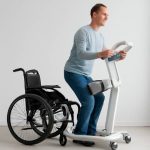
For millions of individuals recovering from surgery, living with progressive muscular conditions, or navigating the challenges of aging, the simple act of standing up can feel like an insurmountable task. Caregivers, often family members, face a parallel struggle: the physical toll of lifting and supporting a loved one multiple times a day. For decades, the manual transfer process was accepted as a necessary burden. However, a quiet revolution in assistive technology has shifted the paradigm. The electric sit to stand lift has emerged as a cornerstone of modern patient handling, offering a blend of dignity, safety, and biomechanical intelligence that manual lifts and simple transfer belts simply cannot provide. These devices are not just tools; they are precision instruments designed to honor the residual strength of the patient while eliminating the hazardous shear forces and awkward postures that plague caregivers. Unlike full-body sling lifts that require passive hoisting, sit-to-stand lifts encourage active patient participation, which is critical for maintaining muscle tone, circulation, and psychological well-being. The electric mechanism replaces the strenuous manual crank or pump, introducing a smooth, controllable, and repeatable motion that builds trust between the patient and the device. In a healthcare landscape that increasingly prioritizes both patient outcomes and staff retention, the adoption of this technology represents a fundamental upgrade to the standard of care. From bustling rehabilitation hospitals to quiet private homes, the electric sit to stand lift is changing the narrative around mobility limitations, proving that independence can be mechanical without feeling clinical, and that support does not have to compromise human dignity.
Engineering Autonomy: The Mechanics and Safety Architecture of Electric Sit to Stand Lifts
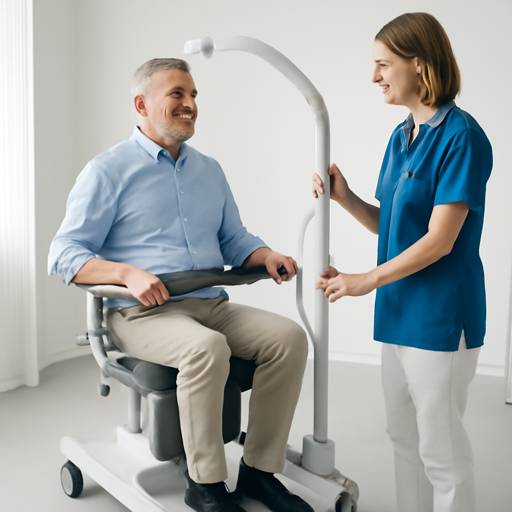
Understanding the engineering behind an electric sit to stand lift is essential for appreciating its value in clinical and home settings. At its core, the device consists of a stable base frame, a vertical mast, and a powered actuator that drives the lifting arm. However, the sophistication lies in the details. The base typically features spreadable legs that accommodate different wheelchair widths, with locking casters that ensure the lift remains stationary during the transfer. When a caregiver activates the lift, the electric motor operates at a low noise level, driving a linear actuator that extends the lifting arm forward and upward in a smooth, arc-like trajectory. This motion mimics the natural biomechanics of standing, reducing the feeling of being "lifted" and replacing it with guided support. Most units offer a range of lifting capacities, typically between 350 and 600 pounds, with the higher end reserved for bariatric applications. A critical safety feature is the emergency stop button, often paired with a manual descent valve that allows the patient to be lowered safely even in a power failure. The sling or harness system attaches to the lifting arm via quick-release clips and wraps securely around the patient's back and under the arms, providing thoracic and pelvic support without impeding the patient's ability to bear weight through their legs. Modern lifts also integrate load cell technology, giving the caregiver a digital readout of the patient's weight. This is not just a convenience; it is a critical data point for tracking recovery, preventing overload, and ensuring the device is used within its safe operating parameters. The control pendant, usually handheld, allows the caregiver to initiate the lift and adjust the height with precision, keeping both hands free to guide the patient. The combination of a low center of gravity, wide wheelbase, and high-torque motor means these lifts can operate on carpet, tile, or uneven flooring without tipping or stalling. When browsing options for an electric sit to stand lift, it is vital to evaluate the chassis construction—look for welded steel frames with corrosion-resistant powder coating—and the battery runtime if the lift is used across multiple shifts. The rechargeable battery systems in many models allow for dozens of transfers per charge, eliminating the need for a constant power cord connection that creates trip hazards. From an infection control perspective, the smooth, non-porous surfaces and removable slings support rigorous cleaning protocols, making these lifts suitable for both acute care and long-term care environments.
Redefining the Care Dynamic: Clinical Outcomes and Caregiver Injury Prevention
The decision to integrate an electric sit to stand lift into a care regimen goes far beyond convenience; it has measurable clinical and economic implications. For the patient, consistent use of a sit-to-stand protocol can significantly delay the loss of ambulatory function. Because these lifts require the patient to bear weight through their lower extremities, they actively engage the quadriceps, glutes, and core muscles. This neuromuscular activation helps prevent muscle atrophy, improves venous return to reduce the risk of deep vein thrombosis, and supports bone density, which is particularly crucial for osteoporotic patients. Furthermore, the controlled, predictable motion reduces the fear of falling. Patients who experience a fall often develop a lasting anxiety that curtails their willingness to attempt standing, leading to a downward spiral of decreased mobility. The electric lift acts as a psychological safety net, allowing the patient to trust the movement and gradually rebuild their confidence. On the caregiver side, the numbers are stark. According to the Bureau of Labor Statistics, musculoskeletal injuries in healthcare and home care settings are among the highest of any industry, with the back being the most commonly injured body part. A single manual transfer can generate compressive forces on a caregiver's lumbar spine exceeding 1,000 pounds. The electric sit to stand lift effectively eliminates this risk by distributing the load mechanically. The caregiver shifts from being a human lifting device to a transfer facilitator, guiding the patient and operating the controls rather than straining their own body. This shift has profound implications for workforce retention. Burnout and injury are primary drivers of turnover in nursing homes and home health agencies. Facilities that invest in safe patient handling equipment report lower injury rates, reduced workers' compensation claims, and higher staff satisfaction. Moreover, the financial argument is compelling. The cost of a single workplace back injury—including medical bills, lost wages, and replacement staffing—can far exceed the purchase price of a high-quality lift. In home settings, the lift enables a spouse or adult child to continue providing care without sacrificing their own physical health, allowing patients to age in place longer and avoid costly institutional care. The use of an electric sit to stand lift also standardizes the transfer process, which is critical in facilities where multiple caregivers rotate shifts. A consistent, documented procedure reduces variability and ensures that every transfer meets the same safety standards.
Beyond the Mechanism: Real-World Applications and Transformative Case Studies
To fully appreciate the impact of an electric sit to stand lift, it is instructive to examine how it performs in diverse, real-world environments. Consider the case of a 72-year-old man recovering from a total knee arthroplasty. In a traditional home care scenario, his spouse would struggle to help him from a recliner to a walker, often resorting to pulling his arms—a maneuver that risks shoulder dislocation and creates friction on the surgical incision. With a sit-to-stand lift, the patient is positioned at the edge of the chair, the sling is secured, and the lift raises him smoothly. He actively pushes through his good leg while the lift provides the missing 40 percent of support. The result is a transfer that is pain-free, controlled, and confidence-building. His physical therapist notes that his active weight-bearing during transfers improves his recovery timeline by two weeks compared to patients using manual assistance alone. In another scenario, a 58-year-old woman with multiple sclerosis uses a sit-to-stand lift in her bathroom. The lift is positioned next to the toilet, and she independently operates the pendant to raise herself from her wheelchair, pivot, and lower onto the toilet. This preserves her privacy and dignity, reducing her reliance on a home health aide for intimate care. The lift becomes a tool for autonomy, not just transfer. In a skilled nursing facility, staff documented a 75 percent reduction in staff back injuries within six months of deploying a fleet of electric sit-to-stand lifts across two wings. The facility also reported a decrease in patient skin tears, which had previously occurred when caregivers manually dragged patients up in bed or chairs. The smooth, lifting motion of the electric mechanism eliminated the shear forces responsible for those injuries. A particularly compelling case involves a veteran with bilateral transfemoral amputations who uses prosthetic limbs. Transferring from his wheelchair to a vehicle was a multi-person effort until a custom sling configuration for a sit-to-stand lift was implemented. The lift provided the torso stability needed to engage his prosthetics safely, and he could now transfer independently with the lift as his partner. These examples underscore a critical insight: the electric sit to stand lift is not a one-size-fits-all device. Its true value emerges when it is adapted to the specific anatomy, weight-bearing capacity, and living environment of the user. The sling design, the placement of handles, and the lift's speed settings all contribute to a customized experience that respects the patient's unique path to recovery or adaptation.