For millions of individuals navigating mobility challenges—whether from spinal cord injuries, post-operative weakness, or the natural progression of age—the act of standing is far more than a mechanical motion. It is a declaration of autonomy. Yet traditional transfer methods, reliant on manual lifting or cumbersome full-body slings, often strip away that sense of agency. The electric sit to stand lift changes this dynamic entirely. By harnessing the patient’s own residual strength while providing powered, smooth vertical movement, these devices transform a high-risk transfer into a controlled, dignified process. This is not merely a piece of medical equipment; it is a bridge back to participation, reducing both the physical toll on caregivers and the psychological weight of dependency.
The Mechanics of Safety: Understanding Electric Sit to Stand Lift Operation
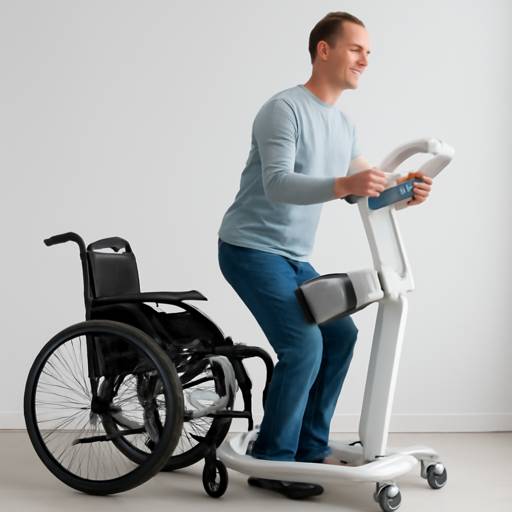
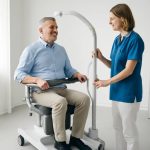
At its core, an electric sit to stand lift operates on a principle of assisted weight bearing. Unlike ceiling lifts or full-body slings that suspend a completely passive patient, these units require the individual to bear some weight through their legs. The patient sits on a small, contoured platform or sling seat while placing their feet flat on a base plate. A padded knee block stabilizes the legs, preventing forward sliding. The caregiver then activates a hand control or foot pedal, and the lift’s electric actuator smoothly raises the platform, guiding the patient to a near-standing position. The critical distinction lies in patient engagement: the individual actively participates in the transfer, maintaining muscle tone and improving circulation.
Modern units are engineered with redundancy and precision. Lithium-ion batteries provide consistent power for multiple transfers between charges, while emergency stop buttons and manual override cranks ensure safety if power fails. Weight capacity typically ranges from 350 to over 600 pounds, accommodating bariatric patients. The base legs of these lifts often feature spreading technology, widening for stability during the lift and narrowing to navigate through standard doorways. This dynamic geometry is crucial for fall prevention. When integrated with a powered standing frame, the device also counters orthostatic hypotension—a common issue in prolonged bed rest—by gradually bringing the patient upright, allowing the cardiovascular system to adjust. Caregivers benefit from reduced lumbar strain, as the machine bears the load that would otherwise require two or three staff members. The user manual for any high-quality unit emphasizes checking foot placement and knee pad position before each transfer, as improper alignment can compromise balance. This mechanical synergy, where patient effort meets powered assistance, is what makes the electric sit to stand lift a linchpin in modern rehabilitative care.
Clinical Benefits and Caregiver Relief: Why Facilities Invest in Electric Sit to Stand Technology
The adoption of electric sit to stand lifts in hospitals, long-term care centers, and home environments is driven by two converging needs: patient safety and staff retention. According to occupational health studies, manual patient handling is the leading cause of workplace injuries among nurses and nursing assistants. Each manual lift places thousands of pounds of cumulative force on a caregiver’s spine. With the electric sit to stand lift, that force is transferred to the machine’s chassis. Facilities that have implemented “no manual lift” policies report a 50 to 70 percent reduction in staff injuries, directly lowering workers’ compensation claims and lost workdays. For a 200-bed skilled nursing facility, this can translate into annual savings exceeding $100,000.
Beyond financials, the clinical impact on patient outcomes is profound. Standing transfers reduce the risk of pressure injuries by alleviating constant sitting pressure. They also promote bowel and bladder regularity, improve respiratory function, and slow muscle atrophy. Stroke survivors, for instance, regain neuroplastic benefits when weight-bearing exercises are integrated into daily transfers. A patient who uses a reliable electric sit to stand lift can often transition to a standing frame or walker faster than someone confined to total passive lifts. The technology also supports fall mitigation; most units include non-slip footplates, anti-rollback brakes, and audible alarms for low battery. In dementia care, the predictable, gentle motion of the lift reduces agitation compared to manual lifting. Caregivers report higher job satisfaction when they feel equipped to perform transfers safely. The decision to purchase an electric sit to stand lift is not just a procurement choice—it is a strategic investment in the dignity of every individual who sits down hoping to stand up again.
Real-World Applications: Case Studies in Effective Sit to Stand Lift Utilization
The impact of this technology becomes tangible when examined through specific clinical scenarios. Consider a 45-bed rehabilitation facility specializing in spinal cord injury recovery. Administrators noted that patients with incomplete paraplegia (able to bear partial weight) were frequently refusing transfers due to fear of falling. The facility replaced its manual standing frames with electric sit to stand lifts equipped with feedback sensors that displayed weight distribution on a digital screen. Within six months, transfer refusal dropped by 65 percent. Patients could visually confirm they were loading both legs equally, building confidence. One case involved a 38-year-old construction worker with a lumbar fracture; after four weeks of using the lift three times daily, he progressed from requiring maximum assistance to walking 20 feet with a rolling walker. The physical therapist attributed this to the active muscle engagement the lift demanded.
Another example comes from a home health agency in a rural area. A client with advancing amyotrophic lateral sclerosis (ALS) retained leg strength but had compromised trunk control. Traditional sling lifts left him feeling vulnerable and passive. The occupational therapist introduced an electric sit to stand lift with a custom back support harness. Over nine months, the client maintained the ability to stand for brief periods, enabling him to transfer to a commode chair independently. His wife, the primary caregiver, reported a 90 percent reduction in her own back pain. The lift’s compact footprint allowed it to fit in a small bathroom, a common constraint in residential settings. These narratives underscore that the electric sit to stand lift is not a one-size-fits-all device but a flexible tool that adapts to unique pathologies. Providers should assess not only weight capacity and footprint but also the angle of knee pad articulation and the shape of the seat platform to match the patient’s body mechanics. When chosen correctly, the lift becomes a silent partner in rehabilitation, enabling progress that feels less like therapy and more like recovery.